Creatine is the single most-researched supplement in sports nutrition. It also has the strongest evidence base for women over 40. The 2017 International Society of Sports Nutrition position stand and the Smith-Ryan review in Nutrients both confirm: creatine monohydrate works, it’s safe, and women specifically benefit from it.
Despite this, most women I work with as a registered dietitian have either never tried creatine or have abandoned it after two weeks because of misinformation. They’ve heard it causes water retention and hair loss. They’ve heard it’s a “men’s supplement.” They’ve heard they need to load with 20 grams a day. They’ve heard you have to time it perfectly around workouts.
Almost all of that is wrong, dated, or misleading. Here’s what the research actually says.
TL;DR
- Take 5 grams per day of creatine monohydrate. No loading phase needed.
- Take it any time, morning, with workout, before bed, with coffee, in a smoothie. Consistency matters; timing doesn’t.
- The benefits are real and broader than just muscle: muscle gain, strength gain, bone density support, possibly cognitive benefits in postmenopausal women.
- Side effects are minimal: 2-3 lb water retention (mostly in muscle, not “bloat”), occasional mild GI upset.
- What to buy: any creatine monohydrate, micronized for mixability. Optimum Nutrition Micronized Creatine, Thorne Creatine, Bulk Supplements Creatine Monohydrate are all reliable picks at $0.30-$0.60 per serving.
- Skip: creatine HCL, kre-alkalyn, “ethyl ester” or any fancy form (no advantage over monohydrate). Skip pre-workout blends with 1-2g of creatine (it’s underdosed).
What creatine is (and what it isn’t)
Creatine is a small molecule that lives in your muscle cells. Specifically, it lives as phosphocreatine, creatine bound to a phosphate group. Phosphocreatine is the body’s fastest energy source for short, high-intensity efforts (under ~10 seconds). Your first squat rep, your sprint to catch a closing elevator, your push to stand up from a low couch.
Your body makes creatine from three amino acids (arginine, glycine, methionine) at a rate of about 1 gram per day. You also get about 1 gram per day from animal foods (red meat, fish, poultry). Your total daily turnover is about 2 grams per day, and your muscle stores are typically 60-80% of maximum capacity in untrained, non-supplementing women.
What creatine supplementation does: fills the rest of the storage tank. Saturated muscle phosphocreatine stores mean more available energy for short, intense efforts.
What creatine is not:
- Not a hormone. It does not affect estrogen, testosterone, cortisol, or any other hormone.
- Not a stimulant. It doesn’t make you “feel” anything in the way caffeine does.
- Not a steroid. The myth that creatine is “like a steroid for women” is biologically unfounded.
- Not banned. WADA, the IOC, and every major sports organization permit creatine.
It is, simply, a small molecule that fills an energy reservoir in your muscle cells.
Does creatine work for women? (the evidence)
Yes. The research base is now substantial enough that this question is largely settled.
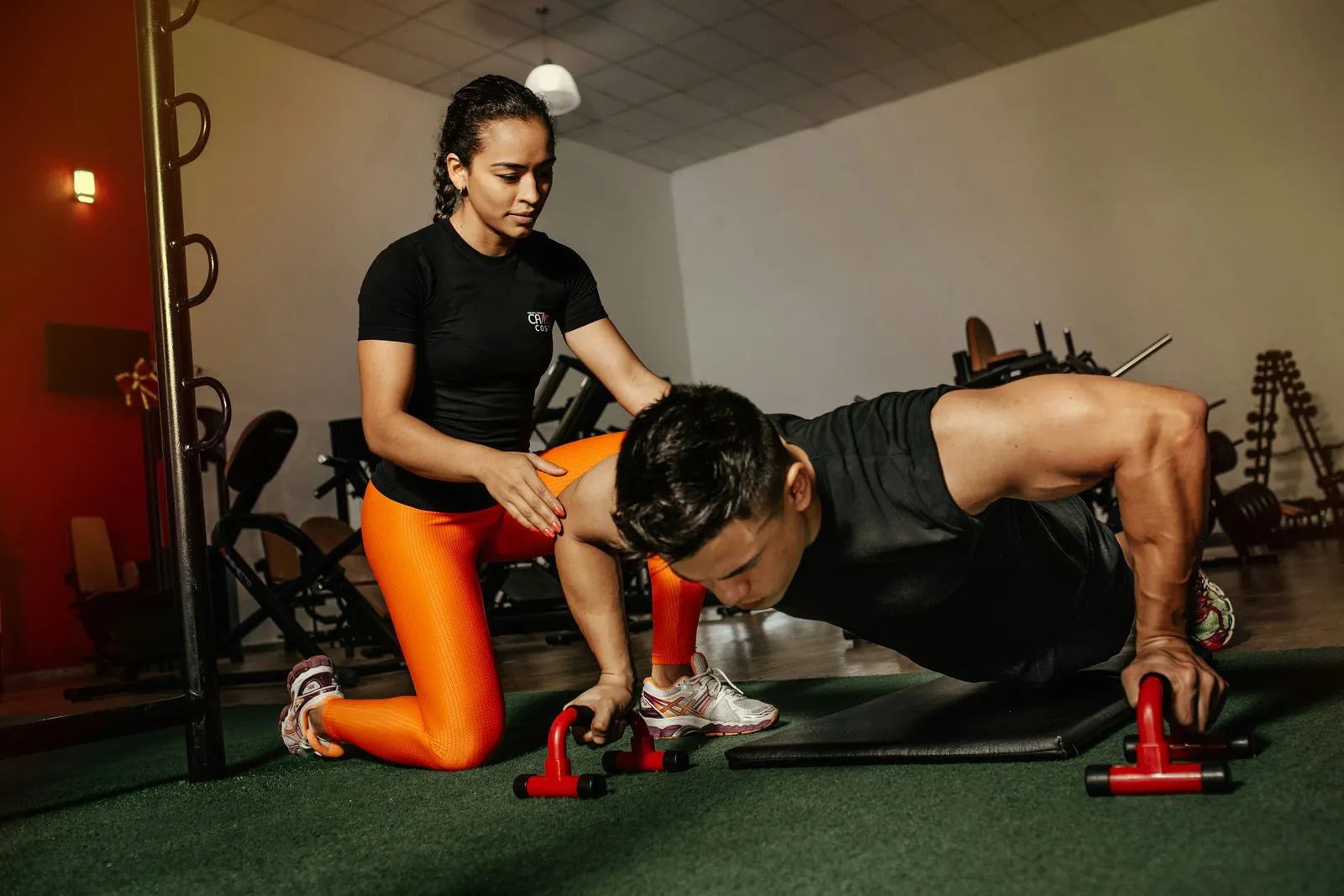
Muscle and strength gains. Multiple meta-analyses including Chilibeck et al. 2017 and the 2017 ISSN position stand confirm that creatine supplementation combined with resistance training produces:
- Greater lean mass gains (typically 1-2 lb additional lean mass over 8-12 weeks vs. training alone)
- Greater strength gains (5-10% above training alone, depending on the lift and study)
- Improved high-intensity exercise performance
These benefits are nearly identical for women and men in percentage terms.
Bone density. Chilibeck et al. 2015 demonstrated that postmenopausal women taking creatine while doing resistance training showed greater preservation of bone density at the hip and femoral neck compared to placebo. The effect size is meaningful for women in the menopause transition.
Cognitive function. Smith-Ryan et al. 2021 reviewed the evidence on creatine for cognition and noted promising effects in older adults, particularly for working memory and processing speed under cognitive stress. The evidence is strongest in older adults and during sleep deprivation. Not yet definitive but growing.
Metabolic and recovery effects. Creatine improves glycogen storage in muscles and may reduce muscle damage and soreness after eccentric exercise (i.e., the muscle damage from heavy lifting). Useful for recovery between training sessions.
Bottom line: the question “does creatine work?” was answered in the 1990s. The current research is on optimizing dosing and exploring secondary benefits (cognition, bone, mood). Healthy adult women who lift weights are excellent candidates.
Benefits beyond muscle: bone, brain, mood
The exciting research of the last 5 years isn’t about muscle, it’s about everything else creatine does.
Bone density
Phosphocreatine plays a role in osteoblast function (the cells that build new bone). Combined with resistance training, supplemental creatine appears to enhance bone formation in postmenopausal women, when bone loss accelerates due to declining estrogen. The Smith-Ryan review in Nutrients identifies postmenopausal women as one of the populations most likely to benefit.
This isn’t a substitute for resistance training (and it’s not a substitute for HRT if you’re a candidate). It’s a low-cost, well-tolerated additive layer on top of those interventions.
Brain and cognition
Creatine isn’t just in muscle; it’s in brain tissue too. The brain uses ~20% of the body’s energy, much of it ATP-dependent, and creatine supports ATP regeneration.
The growing research suggests creatine may:
- Improve working memory and processing speed in older adults
- Reduce mental fatigue
- Possibly support mood (some preliminary research suggests benefit in depression, especially when combined with SSRI medication)
- May be neuroprotective during traumatic brain injury (this is an active research area)
Most of this research is preliminary or in specific populations. But the safety profile is so strong that the cost-benefit even for “possibly helps” is favorable.
Sleep and recovery
Some research suggests creatine helps mitigate cognitive deficits from sleep deprivation. For women in perimenopause when sleep often fragments, this is an underrated potential benefit.
How much to take (and the loading-phase question)
The right dose: 5 grams per day of creatine monohydrate.
That’s it. Take it once a day, every day. Mix it in water, coffee, juice, a protein shake, oatmeal, yogurt, anything liquid or moist. Creatine has minimal taste; some people detect a faint sweetness.
The loading phase question
Older protocols recommended a loading phase: 20 grams per day (4 doses of 5g) for 5-7 days, then 5g per day maintenance. The loading phase saturates muscle stores faster (about 1 week vs. 3-4 weeks with steady 5g daily).
Most women don’t need to load. Reasons:
- The end result (saturation) is the same after about 4 weeks regardless of loading.
- The 20g loading phase is more likely to cause GI distress and water-retention discomfort.
- Steady 5g per day is simpler and less stressful on adherence.
When loading might make sense: if you’re starting creatine specifically before a meaningful event (a competition, a tournament, a vacation hiking trip 4 weeks out) and you want full benefit faster. Otherwise, skip it.
Should you cycle creatine? No. There’s no evidence cycling provides benefit. Take it daily, indefinitely.
When to take it (it doesn’t matter as much as you’ve been told)
Old advice: “take creatine immediately post-workout for maximum absorption.”
Newer evidence: it doesn’t really matter when you take it. What matters is consistency across weeks, not timing within a day.
Antonio and Ciccone 2013 compared pre-workout vs. post-workout creatine timing in resistance-trained men over 4 weeks and found a small advantage to post-workout, but the difference was minor. More recent reviews suggest the timing effect, if it exists, is small enough that it’s not worth optimizing for.
The practical advice:
- Take it whenever you’ll consistently remember.
- Mix it into a daily anchor: morning coffee, a protein shake, with breakfast, before bed.
- If you take it pre-workout, fine. If you take it post-workout, fine. If you take it at 9 PM with chamomile tea, also fine.
- Take it on rest days too. The point is steady daily intake, not “loading the muscle for a workout.”
What to buy (and what to skip)
Creatine is one of the easier supplements to buy because the research is overwhelmingly clear that monohydrate is the only form worth using. Other forms (HCL, ethyl ester, kre-alkalyn, magnesium chelate, etc.) have less research, are more expensive, and offer no proven advantage. For our full ranked picks across every budget, see the best creatine for women buyer’s guide.
The reliable picks
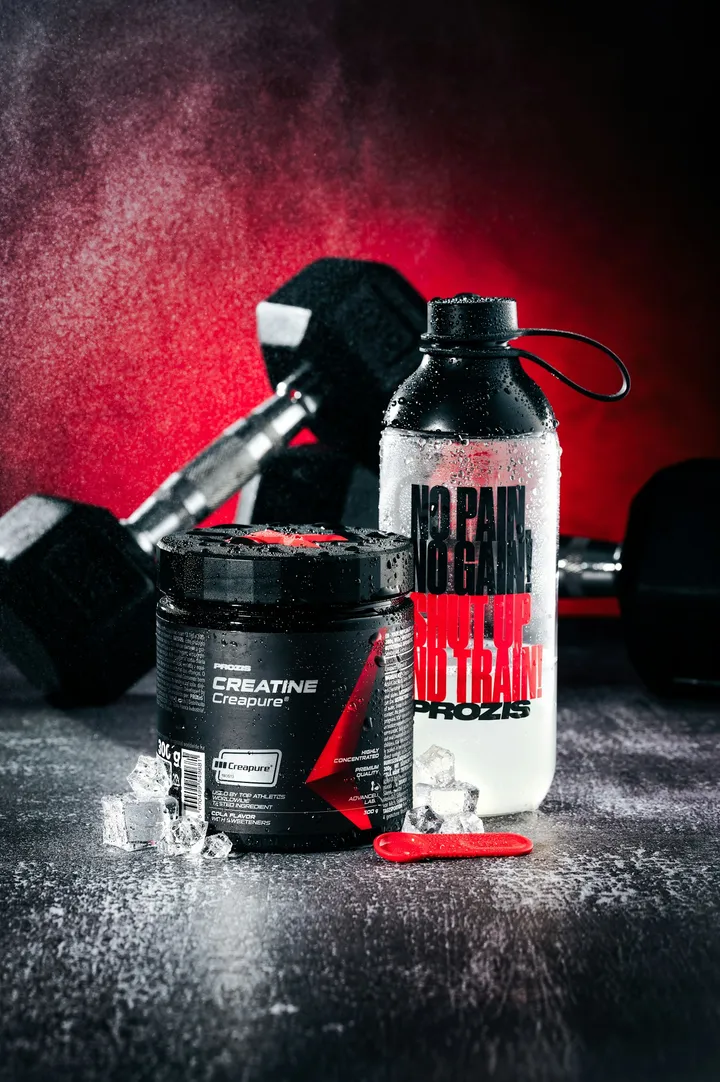
Optimum Nutrition Micronized Creatine ($25-30 for 600g / 120 servings). The workhorse. Third-party tested, widely available, mixes well. Best per-serving cost in the mid-tier.
Thorne Creatine ($30-40 for 90 servings). Higher quality control, NSF Certified for Sport (third-party verified to be free of banned substances if that matters to you). More expensive per serving but worth it for the QC.
Bulk Supplements Creatine Monohydrate ($25-50 depending on quantity, often the cheapest per serving). Pure creatine monohydrate, no added flavors or fillers. Less mixable than micronized but works fine.
Klean Athlete Creatine ($35-45 for 60 servings). NSF Certified for Sport. Premium pricing.
Important features when buying:
- Form: creatine monohydrate. Not HCL, not ethyl ester, not “advanced” anything.
- Micronized is preferred (mixes better, less grit). Non-micronized works fine if you’re mixing into yogurt or a smoothie.
- Third-party tested (NSF, Informed Sport, USP) is preferred but not mandatory for most women.
- Plain or unflavored is the only choice. Flavored creatines are typically a marketing gimmick with added sweeteners and artificial flavors that you don’t need.
What to avoid in supplement aisles
- Creatine HCL. Marketed as “no loading needed” and “less water retention.” The research doesn’t support either claim’s significance. Costs more, no benefit.
- Kre-Alkalyn (buffered creatine). Marketed as “absorbs better.” Research shows it absorbs the same as monohydrate.
- Creatine ethyl ester. Old marketing fad. Research showed it actually performed worse than monohydrate.
- Creatine in pre-workout blends. Most pre-workouts contain 1-3g of creatine, which is underdosed. You need 5g daily; pre-workouts use creatine as a label-padding ingredient.
- “Women’s creatine” formulas. Add-ins like collagen, BCAAs, or glutamine added to creatine. The collagen is fine but unnecessary in this product. Buy plain creatine and your collagen separately if you want both.
- “Creatine + nitric oxide” blends. Marketing nonsense. Buy plain creatine.
Side effects (the real list)
Honest, complete list:
Common (and usually benign):
- Water retention: 2-3 lbs in the first 2-4 weeks. This is intracellular water, water inside your muscle cells, not bloat-water. Your muscles look slightly fuller; your scale weight goes up by 2-3 lbs. This is not fat gain. It’s the supplement working.
- Mild GI distress in the first week. Some women experience cramping, nausea, or loose stools when starting. Solution: split the 5g dose into 2.5g twice daily, or take it with food.
- Mild bloating. Some women feel a fullness/puffiness during the saturation phase. Usually resolves by week 4.
Uncommon:
- Dehydration. Creatine pulls water into muscle cells, which can dehydrate the rest of you if you’re not drinking enough. Drink your normal water intake plus a small additional amount (8-16 oz extra per day).
- Muscle cramping. Often actually a hydration issue. Drinking enough water typically resolves it.
Rare or unfounded:
- Hair loss. A single 2009 rugby study showed increased DHT in men taking creatine, leading to fears about hair loss. The DHT increase was within normal range and the effect has not been replicated. There is no evidence creatine causes hair loss in women.
- Kidney damage. Decades of research have not shown kidney damage in healthy adults taking creatine. People with pre-existing kidney disease should consult their nephrologist; the research in CKD is mixed.
- Cancer. No documented link between creatine and cancer.
- Liver damage. No documented link between creatine and liver damage in healthy adults.
The honest summary: creatine is one of the most-studied supplements in nutrition science. The safety profile in healthy adults is excellent. Most “side effects” you hear about online are either misunderstood (water weight) or unfounded (hair loss, cancer).
Creatine and weight loss / belly fat (the honest answer)
This is the most-asked question on Google and the most-misanswered on the internet.
Creatine is not a fat-loss supplement.
What creatine does for body composition:
- Helps you build or preserve muscle while in a calorie deficit. This means: same total weight on the scale, but less fat and more muscle. That’s a meaningful body-comp win, but it doesn’t show up on the scale.
- The 2-3 lbs of water retention in the first 2-4 weeks looks like weight gain on the scale. It’s not fat gain. It’s water inside your muscles. Your clothes will fit the same or slightly tighter at first, then loosen as you actually build muscle. For the full picture, see does creatine make you gain weight.
- Creatine doesn’t burn fat directly. It doesn’t increase metabolic rate meaningfully. It doesn’t target belly fat. Anyone selling creatine as a fat-loss supplement is misrepresenting the research.
Practical recommendation if your goal is fat loss: stay on creatine. The muscle preservation benefit is meaningful. Just understand the scale will not move as quickly in the first few weeks because of water weight, and judge progress by clothes fit and tape measurements after 4 weeks, not Day 1.
Who should not take creatine
The honest, narrow list of people who should consult before starting:
- Diagnosed chronic kidney disease. Talk to your nephrologist. The research is mixed and the case-by-case decision is medical, not nutritional.
- Bipolar disorder. Some case reports suggest creatine may exacerbate manic episodes. Talk to your psychiatrist if you have a diagnosis.
- Pregnancy or breastfeeding. Limited research. Talk to your OB-GYN.
- People taking medications metabolized through the kidneys (e.g., NSAIDs daily, certain diabetes medications). Talk to your prescribing physician.
For everyone else with no diagnosed conditions: creatine is one of the safest supplements in the entire nutrition aisle. The historical “is creatine safe?” panic is not supported by the evidence and has been driven by misinformation, not data.
Always: talk to your own doctor about supplements, especially if you’re on medications. This is the standard advice for any supplement, not a special concern with creatine.
A short FAQ
Should women over 40 take creatine?
The evidence says yes for most. The combination of resistance training + creatine has documented benefits for muscle, strength, bone density, and possibly cognition in this age group. The Smith-Ryan review in Nutrients identifies women in the menopause transition as a population particularly likely to benefit.
How long until I see results?
Strength and performance benefits typically appear in 2-4 weeks. Body composition changes appear over 6-12 weeks of combined training and supplementation. The first 2 weeks may include water-weight gain on the scale (this is not fat).
Can I take creatine without working out?
You can. The benefits will be smaller (creatine works best in combination with resistance training, which provides the stimulus for muscle protein synthesis). Some research suggests creatine alone may help maintain muscle in inactive older adults, but the effect size is much smaller than with training.
Can I take creatine with my other supplements?
Yes. Creatine is compatible with protein powder, multivitamins, omega-3s, vitamin D, magnesium, electrolytes, and most other common supplements. There are no documented negative interactions with the typical supplement stack.
Does creatine cause acne?
No documented link. Some women report breakouts when starting creatine, but this hasn’t been demonstrated in controlled research. If you experience persistent acne after starting creatine, consider whether other dietary changes (more whey protein, more dairy) coincided with starting.
Should I cycle off creatine?
No. There is no evidence that cycling creatine provides any benefit. Take it daily, indefinitely.
What if I miss a day?
Nothing. Resume the next day. Your saturation level will dip slightly but recover within 1-2 days of resuming.
Should I take more on training days?
No. 5g daily is the dose, regardless of whether you train that day.
For broader context on training and nutrition for women over 40, see the strength training cornerstone, and for the menopause-specific training adjustments, see perimenopause workout plan.
For other evidence-based supplements (protein, vitamin D, omega-3, magnesium): the rest of the nutrition section will cover these as articles are published.