If your joints started aching somewhere in your 40s and your doctor waved it off as “just getting older,” you deserve a better answer. Menopause and joint pain are genuinely connected, the mechanism is real and well documented, and there is a lot you can do about it that has nothing to do with resigning yourself to stiff mornings.
This is the honest, complete picture: why falling estrogen makes your joints hurt, how to tell menopausal joint pain from actual arthritis, and the treatments that actually work, led by the one almost every other article buries at the bottom.
The short version
- Estrogen protects your joints. When it falls in perimenopause and menopause, joints can get stiffer, achier, and more inflamed. The medical name is menopausal arthralgia.
- The single most effective treatment is movement and strength training, not rest. Muscle supports and offloads your joints, and motion keeps them healthy.
- Hormone therapy helps many women, the evidence is solid, and it is worth a conversation with your doctor.
- Learn to tell it from arthritis. Hot, swollen joints or hour-long morning stiffness mean see a doctor, not push through.
- Supplements do less than the basics. Movement, strength, weight, sleep, and possibly HRT do the heavy lifting.
Why menopause and joint pain go together
Estrogen is not just a reproductive hormone. It acts directly on your joints, with receptors in the cartilage and the synovium (the lining that produces joint fluid), and it has an anti-inflammatory effect throughout the body. Estrogen helps keep cartilage healthy, joints lubricated, and inflammation in check.
When estrogen declines, that protection fades. Joints can become more inflamed and less comfortable, cartilage and connective tissue get less support, and your perception of pain can heighten too. A clinical review of musculoskeletal pain and menopause describes exactly this pattern, common enough that “menopausal arthralgia” is a recognized term. This is the same estrogen-everywhere story behind so many low estrogen symptoms; the joints are simply one more system with estrogen receptors that notices when the hormone leaves.
It is worth saying plainly: this is not you imagining it, and it is not simple aging. It is a hormonal shift with a physical effect, which means it has physical solutions.
What menopause joint pain feels like (and which joints)
The pattern is fairly recognizable once you know it. Menopausal joint pain tends to be:
- Migratory. It moves around, achy knees one week, sore hands or shoulders the next.
- Symmetrical. Often both hands, both knees, rather than one isolated joint.
- Worst in the morning. Stiffness on waking that loosens up within a few minutes of moving.
- Concentrated in the hands, knees, hips, shoulders, and neck. The small joints of the hands and fingers are very commonly involved.
- Worse with inactivity. Sitting too long stiffens you up; gentle movement helps.
It often arrives alongside the other signs of the transition, which is one of the clues that hormones are involved rather than a separate joint disease. The muscular version of this, the deep aches rather than joint stiffness, is its own thing, covered in menopause muscle aches.
The joints menopause tends to hit
People often search by the specific joint that hurts, so here is where menopausal joint pain shows up most:
- Hands and fingers. Very commonly affected, and the stiffness and achiness can mimic early arthritis, which is exactly why it is worth getting checked if the joints also swell.
- Knees and hips. The big weight-bearing joints, where menopausal aching often overlaps with the wear of osteoarthritis. Strength and weight management help most here.
- Feet and heels. Aching feet and morning heel stiffness are common and underrecognized.
- Neck and shoulders. Often tied up with posture and the muscle changes of this stage.
- Lower back and the sacroiliac joints. Frequently sore, and responsive to core and hip strength work.
Wherever it lands, the management below is the same. The exception is a single joint that is dramatically worse, hot, or swollen, which deserves its own look from a doctor.
Is it menopause or arthritis? How to tell
This is the question that matters most, because the answer changes what you should do. Here is the practical version.
It looks like menopausal joint pain when: it appears with other menopause symptoms, moves around and is symmetrical, comes with brief morning stiffness that eases with movement, and the joints look normal (no redness or swelling).
It looks more like osteoarthritis when: the pain is in specific weight-bearing joints (knees, hips), is clearly tied to use and wear, and has built up gradually over years.
See a doctor promptly if you have any of these red flags, which point toward inflammatory arthritis like rheumatoid arthritis: joints that are hot, red, or visibly swollen; morning stiffness that lasts more than an hour; one joint dramatically worse than the rest; or joint pain with fever, marked fatigue, or unexplained weight loss. Inflammatory arthritis is treatable, and early treatment protects the joints, so this is not a “wait and see” situation. When in doubt, get checked.
What actually helps menopause joint pain
Here is where most articles list “stay active” as one bullet among ten. We are going to do the opposite, because the evidence puts movement first.
Movement and strength training (the most underused treatment)
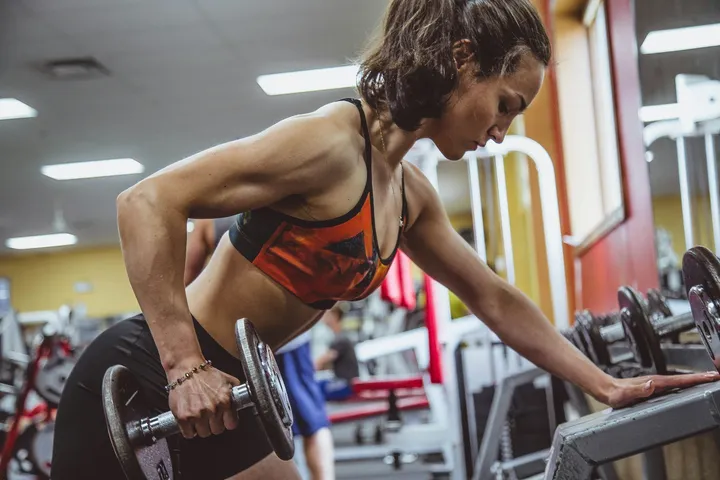
If you do one thing, do this. Regular movement and strength training is the most effective, best-evidenced treatment for aching joints, and it works through several mechanisms at once: muscle supports and offloads the joint, movement circulates the synovial fluid that nourishes cartilage (the “motion is lotion” idea), and exercise lowers systemic inflammation. A systematic review and network meta-analysis of exercise therapy for knee osteoarthritis found exercise meaningfully reduces joint pain and improves function, on par with what people hope to get from pills.
Strength training specifically builds the muscle around your joints, and stronger muscles mean less load and more stability for the joint itself. This is the heart of the case we make in strength training for women over 50 (and over 40). Aching joints are a reason to start, not a reason to wait.
Hormone therapy (HRT) and joint pain
Because the problem is partly hormonal, replacing the hormone often helps. In the Women’s Health Initiative, women taking estrogen reported less joint pain and stiffness than those on placebo. Hormone therapy is not right for everyone, but joint pain is a legitimate reason to discuss it, and many women find it makes a real difference. This is a conversation for your doctor or a certified menopause practitioner, not a decision to make from an article.
Weight, sleep, and the anti-inflammatory basics
Body weight matters mechanically: every extra pound puts several pounds of force through your knees with each step, so losing even a little reduces joint load. The body composition shifts of this stage make this harder and more important at once, and the lever is strength training plus enough protein (you can calculate your target). Poor sleep also amplifies how much pain you feel, so protecting sleep genuinely helps. An anti-inflammatory eating pattern (more fish, vegetables, and olive oil, less ultra-processed food) helps at the margins.
Supplements: what is worth it and what is not
The honest ranking. Vitamin D is worth checking, since deficiency is common and causes aches, but test rather than guess. Omega-3 and curcumin (from turmeric) have modest evidence for joint pain and are reasonable to try. Collagen is covered honestly in our collagen guide. None of these is a fix, and all of them stacked together do less than consistent strength training. Spend your money and attention accordingly.
How to exercise when your joints already hurt
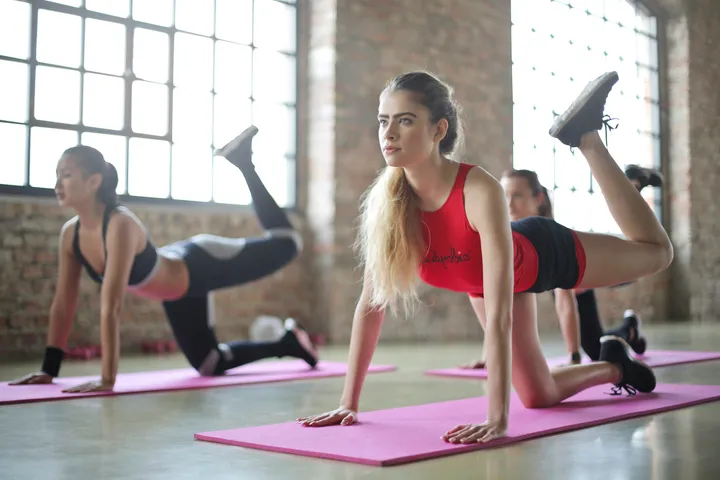
The instinct when a joint aches is to rest it. For menopausal joint pain, that usually backfires: rest stiffens the joint and weakens the muscle that protects it. The goal is to move smart, not to stop.
- Stay low-impact where you need to. Walking, cycling, swimming, and the elliptical load the joints gently while still building fitness.
- Strength train through pain-free range. Work the range that does not hurt, and it usually expands over weeks as the muscle strengthens.
- Warm up first. A few minutes of easy movement makes stiff joints far more comfortable to load.
- Know the difference between sore and damaged. A dull ache during or after that settles within a day is normal and fine. Sharp pain, a joint that swells, or pain that worsens session to session is a signal to back off and reassess.
Strength training does not wear out your joints. Done sensibly, it is one of the best things you can do for them.
Will menopause joint pain go away?
For many women it eases in the years after menopause, as hormone levels stop fluctuating and settle. But it is not guaranteed, and it is not purely a waiting game. How your joints feel five years from now depends heavily on how much muscle you keep, how active you stay, and your weight. Hormone therapy resolves it for some. The women who come out the other side feeling strong are, almost without exception, the ones who kept moving and kept lifting through it.
When to see a doctor
Book an appointment if you have the red flags above (hot, swollen, or red joints; morning stiffness over an hour; one badly affected joint; or joint pain with fever, fatigue, or weight loss), if the pain is severe or stopping you from daily activities, or if you want to discuss hormone therapy. A good clinician can rule out inflammatory arthritis and other conditions and help you build a plan. You are not being dramatic by getting joint pain checked; you are being sensible.
What to skip
- Rest and immobility. The most natural response is the wrong one. Stiff, unused joints get worse, and the muscle that protects them wastes.
- Waiting it out with no strength training. Time alone does not build the muscle and joint resilience that actually help.
- Expensive supplement stacks before the basics. Movement, strength, weight, sleep, and possibly HRT come first. Supplements are a small add-on.
- Ignoring red-flag symptoms. Hot, swollen joints or hour-long stiffness are not something to push through. Get them seen.
- “Joint support” gimmicks. Copper bracelets, magnetic wraps, and most “joint” gadgets do nothing. Save the money for a good pair of shoes and a set of dumbbells.
The bottom line
Menopause and joint pain are really connected, through estrogen’s loss of its protective, anti-inflammatory role in your joints. That is the bad news and the good news at once, because a hormonal, physical problem has real, physical solutions. Move and strength train as the foundation, talk to your doctor about hormone therapy, manage your weight and sleep, use supplements only as a minor add-on, and learn the red flags that mean it is something else. Do that, and aching joints become a problem you actively manage and largely beat, not a sentence you serve.