If you’re in perimenopause and the scale is moving in a direction you don’t recognize, the explanation is not that your willpower failed. It’s that the system you’ve been running for 30 years (eat roughly the same, move roughly the same, weight stays roughly the same) has changed inputs. Estrogen drops. Lean muscle erodes. Sleep gets worse. Fat redistributes to your abdomen. The result for the average woman in perimenopause weight gain is 1.5 pounds a year, per the SWAN study, about 5 pounds across the full transition, and 10+ pounds for one in five women.
Most articles on this topic stop at “eat better, exercise more, talk to your doctor.” That advice is correct and useless. This guide gives you the four levers that actually move body composition during perimenopause, with the numbers attached, plus an honest section on HRT, GLP-1s, and what to skip.
TL;DR
Perimenopause weight gain is mostly driven by falling estrogen (which redistributes fat to the abdomen), age-related muscle loss, and disrupted sleep. The average woman gains about 1.5 pounds per year during the transition. The four interventions that actually move the needle: resistance training 2-3 times per week, 0.7-1.0 grams of protein per pound of bodyweight, 25-30 grams of fiber daily, and protecting sleep. Body composition matters more than the number on the scale.
Who this is for
Women 40-55 who:
- Have noticed weight gain (especially around the midsection) that doesn’t respond to the diet and exercise approach that used to work
- Are tired of vague “eat clean, move more” advice and want specific numbers
- Are open to lifting heavy weights, not just walking and yoga
- Want a straight answer on HRT and GLP-1s without the moral panic or the influencer hype
What’s actually causing perimenopause weight gain
Five mechanisms, in order of how much they move the needle.
Estrogen drops and fat redistributes to your belly
Estrogen is not just a reproductive hormone. It influences where your body stores fat (premenopausally, hips and thighs; postmenopausally, abdomen) and how insulin-sensitive your tissues are. As estrogen falls and fluctuates through perimenopause, fat shifts to the visceral compartment (around your organs), which is more metabolically active and more associated with cardiometabolic risk.
This is the perimenopause belly that didn’t exist at 35. It is not because you “let yourself go.” It’s because estrogen was actively keeping fat out of that compartment, and now it isn’t.
You’re losing muscle (sarcopenia), about 1% a year after 40
Starting in your 40s, women lose roughly 1% of lean muscle mass per year if you don’t actively train against it. Less muscle means a lower basal metabolic rate, fewer calories burned at rest, less glucose disposal, and a weaker reserve for any physical challenge. The compound effect over a decade is significant: by 50, a woman who hasn’t been strength training has lost 8-10% of the muscle she had at 40.
This is the single biggest reason “the same diet and exercise stopped working.” It’s not that the diet stopped working. It’s that you’re carrying 8 pounds less muscle. Rebuilding it while losing fat is the goal worth chasing here, and we lay out exactly how in body recomposition for women over 40.
For the physiology and the training response, see our strength training for women over 40 guide, which covers the SWAN and LIFTMOR data on body composition response to resistance training in this age group.
Sleep disruption blows up appetite and recovery
Perimenopause wrecks sleep. Hot flashes, night sweats, anxiety, and shifting hormones produce fragmented sleep for 40-60% of perimenopausal women. Insufficient sleep raises ghrelin (hunger hormone), lowers leptin (satiety hormone), increases cortisol, decreases insulin sensitivity, and makes you reach for fast carbs the next day. The effect on weight is not subtle. A meta-analysis in the journal Sleep found short sleep is associated with a 38% higher risk of obesity.
You can’t out-train or out-diet chronically broken sleep. This is why we treat sleep as a first-line intervention, not an afterthought.
Cortisol and stress make abdominal fat worse
Chronic stress raises cortisol, and elevated cortisol preferentially deposits fat in the abdomen (the same area estrogen used to protect). Perimenopausal women are often in a stress sandwich: aging parents, teenage or college-age kids, peak career responsibility, and a body that doesn’t recover the way it used to. The cortisol effect compounds with the estrogen effect on belly fat.
Your metabolism slows less than you think
The popular story is “your metabolism crashes in perimenopause.” It doesn’t. A landmark 2021 study published in Science (Pontzer et al.) tracked metabolic rate across 6,400 people from infancy to age 95 and found that basal metabolism stays remarkably stable from ages 20 to 60 (adjusted for fat-free mass), then declines slowly. The “metabolic slowdown” women feel in perimenopause is largely the result of losing muscle, sleeping worse, and moving less, not a metabolism that fell off a cliff.
This is good news. The lever you have over body composition (build muscle) is the same lever that addresses the metabolic feeling, because muscle is where most of your basal metabolism happens.
How much weight, on average, and how long it lasts
The most-cited longitudinal data on perimenopausal weight comes from the Study of Women’s Health Across the Nation (SWAN), which has tracked thousands of women through the menopause transition for over two decades.
Key numbers:
- Average weight gain across the transition: about 5 pounds
- Average annual gain in perimenopause: 1.5 pounds per year
- Twenty percent of women gain 10 pounds or more
- Body composition change is larger than scale weight: lean mass falls, fat mass rises, fat redistributes to the abdomen
- Without intervention, gain typically continues for 4-8 years and plateaus 1-3 years into postmenopause
So the average isn’t catastrophic. But the distribution is wide, and the body composition shift is real even for women whose scale weight stays flat. This is why we look at how clothes fit, waist circumference, and strength markers, not just the scale.
What actually works: the four levers
If you do only one thing from this article, do the first one. The order is by effect size.
Lever 1: Lift heavy 2-3 times a week
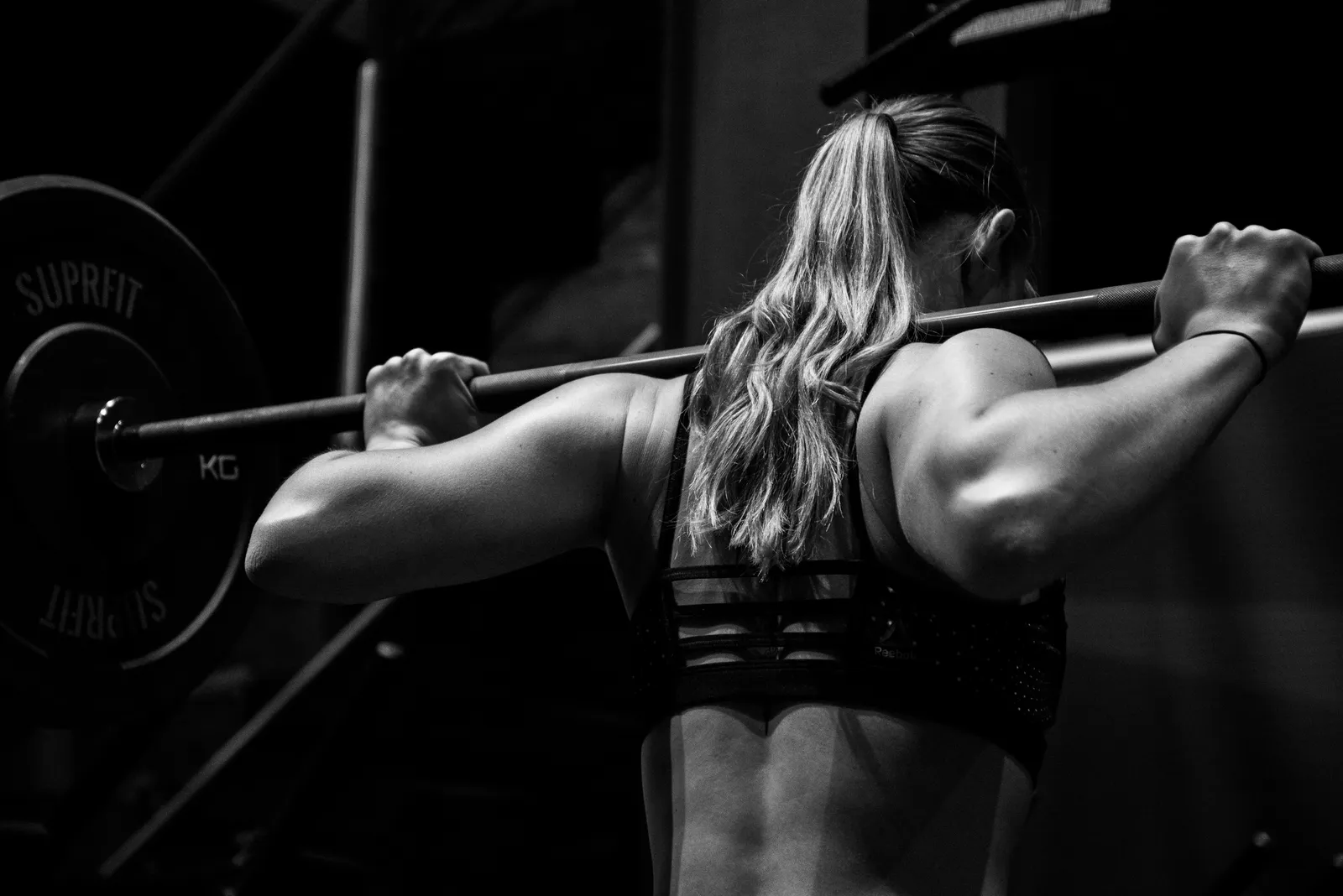
Resistance training is the single most effective intervention for perimenopausal body composition. It does four things at once: builds muscle (addressing sarcopenia), improves insulin sensitivity, increases bone density, and creates a metabolic demand that compounds across the day.
What “lift heavy” means for a 45-year-old beginner: 3-4 sets of 6-10 reps of compound movements, at a weight where the last 2 reps are genuinely difficult. Not 3 sets of 15 with the pink dumbbells. The LIFTMOR trial demonstrated heavy resistance training (up to 85% of 1-rep max) is safe and effective in postmenopausal women, including those with low bone density.
The minimum effective dose: 2 days per week, full-body, 45-60 minutes per session. 3 days per week is better. More than 4 days per week starts to compete with recovery in this age group.
The exercises that matter: squat or leg press, deadlift or hip hinge variant, push (bench press, overhead press, or push-ups), pull (row, lat pulldown, or pull-up), carry (farmer’s carry, suitcase carry).
If you want an actual program written for this stage, our perimenopause workout plan is an 8-week, 3-day-per-week template you can run starting Monday. For a longer-arc plan, our 12-week program for women over 40 covers base, build, and peak phases.
Lever 2: Eat 0.7-1.0 grams of protein per pound of bodyweight
Protein needs go up in perimenopause for two reasons: anabolic resistance (your muscle is less responsive to protein than it was at 30, so you need more to get the same signal) and the increased recovery demand of resistance training.
Target: 0.7-1.0 grams of protein per pound of bodyweight per day. For a 150-pound woman, that’s 105-150 grams of protein daily. Most women in this age range eat 50-70 grams. Closing that gap is one of the highest-leverage changes you can make.
Distribution matters: spread protein across 3-4 meals of 25-40 grams each. The “30 grams at breakfast” rule from the 30/30/30 framework is on the right track because most women under-eat protein in the morning. A breakfast of 2 eggs and toast is ~14 grams of protein. A breakfast of 3 eggs, Greek yogurt, and toast is ~32 grams.
If you can’t hit your number from food, a quality protein powder helps. Our nutrition editor’s protein drinks for women over 50 guide covers what to look for (leucine content, third-party testing, ingredient quality) and what to skip (most “menopause protein” formulas with proprietary blends).
Lever 3: Get 25-30 grams of fiber daily and prioritize whole-food carbs
Fiber is the most under-rated weight-management nutrient. It slows gastric emptying (you feel full longer), feeds the gut microbiome (improves metabolic markers), blunts blood sugar response, and helps with the bloating and gut motility issues that get worse in perimenopause.
Target: 25-30 grams per day. Most American women eat 12-15 grams.
How to get there: 1 cup of cooked lentils (15g), 1 cup of raspberries (8g), 1 ounce of chia seeds (10g), 1 cup of cooked oats (4g), 1 medium pear (5g). Two of those a day and you’re at target.
Carbohydrate strategy: this is not a low-carb article. Cutting carbs aggressively in perimenopause often backfires by tanking sleep, mood, and training quality. Center starchy whole foods (oats, potatoes, rice, beans, fruit) around training days, and let total intake match your hunger and energy. The body comp work happens through protein and lifting, not through carb restriction.
Lever 4: Fix sleep before you blame your diet
If you’re sleeping 5 hours a night in fragmented chunks, you do not have a willpower problem. You have a sleep problem masquerading as one. Fix this first, or you’ll spend years grinding against a biology that’s stacked against you.
The interventions worth trying (in evidence-ranked order):
- Treat the menopause symptoms causing the wakes. Hot flashes and night sweats are the #1 sleep disruptor in this stage. HRT is the most effective intervention for vasomotor symptoms in symptomatic women, per NAMS. Non-hormonal options (cognitive behavioral therapy for insomnia, low-dose SSRIs, oxybutynin) are second-line.
- Sleep hygiene that actually works: room cool (65-67F), no screens 60 minutes before bed, fixed wake time even on weekends, alcohol cap of 1 drink and not within 3 hours of sleep.
- Magnesium glycinate, 200-400 mg before bed. Modest but reliable evidence for sleep quality and a sub-effect on muscle tension/cramping.
- Skip melatonin unless you’re managing jet lag. The dose-response evidence is weak and most over-the-counter doses (3-10 mg) are 10x what’s clinically effective (0.3-1 mg).
The training, the protein, and the fiber will work three times harder once you’re sleeping 7+ hours.
The medical options: HRT and GLP-1s
This is the section every general perimenopause article handles badly. Either they avoid the topic entirely or they oversell it. The honest version:
HRT and weight: indirect help, not a direct weight-loss tool
The evidence does not support HRT as a weight-loss medication. The randomized trials don’t show meaningful weight differences between women on HRT and women on placebo.
What HRT does, in symptomatic women:
- Reliably improves sleep quality (especially for those with night sweats)
- Reliably improves mood and energy
- Reduces vasomotor symptoms (hot flashes)
- Reduces the abdominal fat redistribution seen with estrogen decline
- Preserves bone density
All of those compound into weight outcomes through indirect mechanisms (better sleep → better appetite regulation → better training → better body composition). The Mayo Clinic frames this honestly: HRT isn’t a weight pill, but it makes the other levers easier to pull.
Decision-making: HRT decisions belong with a NAMS-certified menopause practitioner who knows your symptom profile, your cardiovascular risk, your breast cancer family history, and your time-since-menopause. Don’t take HRT advice from supplement-company quizzes or direct-to-consumer pellet clinics.
For more on the connection between estrogen and musculoskeletal symptoms, see our menopause muscle aches article, which covers the 2024 clinical framing of Musculoskeletal Syndrome of Menopause.
GLP-1s (semaglutide, tirzepatide): the honest tradeoff
GLP-1 medications work for weight loss. The clinical trials are clear: average loss of 15-20% of body weight on tirzepatide, 12-15% on semaglutide. Many of the women they help most are perimenopausal women whose biology has shifted in ways that make lifestyle interventions alone harder.
The honest tradeoffs:
- They work, but they’re not a substitute for strength training. GLP-1 weight loss is roughly 25-30% lean mass loss without resistance training. If you take a GLP-1 and don’t lift, you will end up smaller but proportionally weaker, which is a worse body composition than where you started.
- The “muscle loss” issue is real but solvable. Adequate protein (0.8-1.0g/lb on the high end while on a GLP-1) plus resistance training preserves most lean mass.
- They’re not a moral failing. Using a GLP-1 isn’t taking a shortcut. It’s using a medication for a biological problem. The same logic applies to HRT.
- Side effects can be significant: GI upset, fatigue, gallbladder issues, and rapid loss of subcutaneous facial fat. These are real and not always discussed honestly by the telehealth companies prescribing them.
If you’re considering a GLP-1, do it through a physician who knows your medical history, not a $99-a-month direct-to-consumer pop-up. And lift weights the entire time you’re on it.
What to skip
The perimenopause industry is enormous, profitable, and largely full of products that don’t work. Here’s what to skip:
- “Hormone-balancing” supplement stacks sold direct-to-consumer with names like Estro-Reset, BalanceBlend, or HormoneHarmony. The evidence is weak, the formulas are usually proprietary blends (a regulatory loophole that lets companies hide doses), and the marketing relies on women not knowing that “hormone-balancing” isn’t a clinical concept.
- BHRT pellets sold by direct-to-consumer clinics. Compounded bioidentical pellets are not FDA-approved, dose unpredictably, and have a higher rate of side effects than FDA-approved transdermal estradiol. NAMS does not recommend them.
- “Detox” teas and cortisol cleanses. Your liver and kidneys handle detoxification. Cortisol isn’t something you cleanse. These are predicated on a misunderstanding of physiology.
- Collagen powder for weight loss. Collagen is a low-quality protein (incomplete amino acid profile, low in leucine). It’s not bad, but it shouldn’t be your primary protein source. The skin and joint claims have thin evidence.
- “Menopause diets” that are just keto rebranded. Aggressive carb restriction often backfires in perimenopause by tanking sleep, energy, and training quality. Sustainable protein-forward eating beats aggressive restriction.
- Most “menopause-specific” protein powders. Marketing markup. A quality whey or pea protein gives you the same amino acids without the “menopause support blend” filler. See our protein drinks for women over 50 guide for what actually works.
- Resistance bands as your primary strength tool. Bands are fine accessories. They’re not a replacement for progressive resistance with weight that has gravity built in.
A reality check on the scale
Body recomposition (gaining muscle while losing fat) is the goal in perimenopause, and the scale is a bad measurement tool for it. Muscle is denser than fat. You can gain 3 pounds of muscle and lose 3 pounds of fat and the scale shows zero progress while your body composition has measurably improved.
Better measurements:
- How your clothes fit, especially in the waist
- Waist circumference, measured at the navel, monthly
- Strength markers: how much weight you’re squatting, pressing, rowing this month vs. three months ago
- Energy and sleep, both lagging and leading indicators of body composition trends
- Photos, same lighting, same outfit, same time of day, every 6-8 weeks
If you have access to a DEXA scan, get one at baseline and one a year later. The body composition data is more useful than 52 weekly weigh-ins.
How to actually start this week
If you want one concrete next step, here it is:
- Schedule three 45-minute strength sessions this week. Monday, Wednesday, Friday. Either use our perimenopause workout plan or follow a coach. Do not wait until you “feel ready.”
- Hit 30 grams of protein at breakfast tomorrow. Eggs, Greek yogurt, cottage cheese, or a protein shake.
- Set a fixed wake time and hold it for two weeks. Sleep regularity matters more than sleep duration in this stage.
- Schedule a NAMS-certified practitioner consult if you have meaningful menopause symptoms (hot flashes, sleep disruption, mood changes) and haven’t had an honest HRT conversation yet.
Most of the women we hear from who turned this around did one thing first (usually the lifting) and the rest followed. The smallest version of this that works is two strength sessions a week and 90 grams of protein a day. Start there. Scale up when you stop hating it.
Where to go next
- Perimenopause Workout Plan: An 8-Week Program That Works, the actual program to run
- Strength Training for Women Over 40, the cornerstone guide on principles and progression
- Menopause Muscle Aches: Causes and What Actually Helps, for the joint and muscle symptoms that often arrive alongside weight changes
- Creatine for Women, the single supplement with the strongest evidence for muscle preservation in perimenopause
- Protein Drinks for Women Over 50, RD-reviewed picks for closing the protein gap