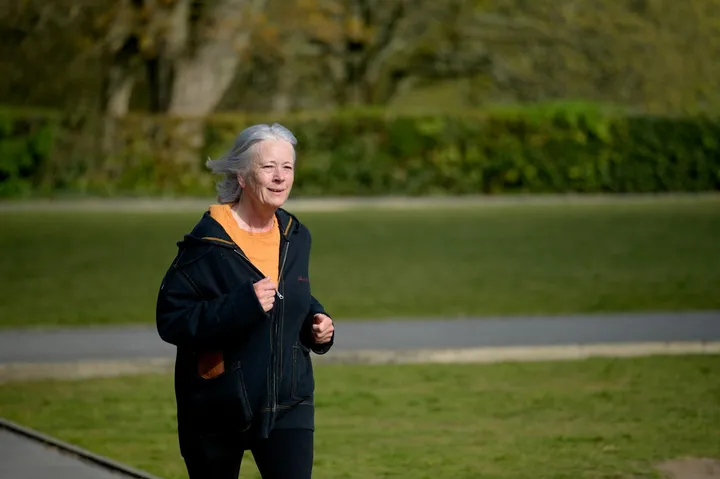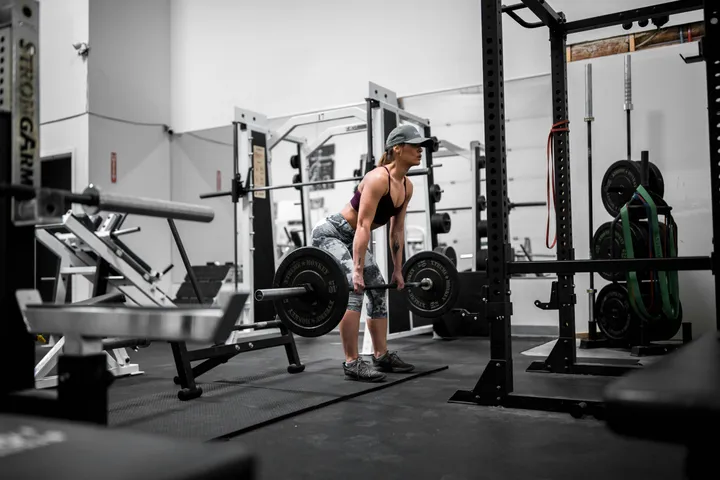
If you walk every day and you are quietly hoping it is also taking care of your strength, this is the honest answer you deserve before you count on it. Walking is one of the best things you can do for your health. Building muscle is not one of those things.
That distinction matters more than it sounds, especially after 40, because the internet is full of headlines promising you can “build muscle just by walking.” Most of them are blurring a simple fact: your muscles working while you walk is not the same as walking building those muscles. Here is what walking actually does, what it does not, and what to do if you want the muscle.
The short answer
No, walking does not meaningfully build muscle for most people. It is excellent for your heart, your mood, fat loss, and longevity, but muscle growth requires something walking does not provide: challenging, progressive load.
- Walking uses your muscles. It does not build them. Using a muscle and overloading it enough to grow are two different things.
- The exception is short-lived. A very deconditioned beginner may see a small initial change, then plateau fast.
- Incline, stairs, and a weighted vest add some load, but still not enough to count as muscle building.
- This matters most after 40, when muscle quietly disappears unless you train to keep it.
- Keep walking. Then add strength training, because that is what actually builds and preserves muscle.
Why walking doesn’t build muscle (the part everyone gets wrong)
Muscle grows in response to progressive mechanical tension. In plain terms, you have to challenge the muscle with a load that is genuinely hard, close to what it can handle, and then increase that load over time. That principle is called progressive overload, and it is the non-negotiable trigger for building muscle.
Walking does not come close. It is low-load and high-repetition, far below the threshold that signals a muscle to grow. Your legs and glutes do contract to move you, which is where the confusion comes from, but carrying your own bodyweight on flat ground is a load your body adapted to many years ago. It is no longer a challenge, so it is no longer a growth stimulus.
The research lines up with this. A study of older adults comparing 10 weeks of walking versus walking plus home-based resistance training found that adding the resistance work produced a greater improvement in muscle quality than walking alone. Both groups walked the same amount; the group that also lifted was the one whose muscle changed more. The walking was the constant, and the added load was what moved the needle.
So when an article tells you walking “strengthens” four muscle groups, read it carefully. Those muscles are active. They are not being built.
What muscles does walking actually use?
Walking does engage real muscles, just lightly and without overloading them:
- Calves, which push you off the ground with each step.
- Quads and hamstrings, which control the leg through the stride.
- Glutes, which fire to extend the hip, more so uphill.
- Core, which stabilizes you as you move.
For someone coming off the couch, that low-level activity can produce a small early strengthening effect. But it tops out quickly, because none of these muscles is being asked to do more than it already comfortably does. After the first few weeks, walking maintains; it does not build.
Can you make walking build more muscle?
You can make walking harder, which adds some stimulus, but not enough to replace strength training.
- Incline, hills, and stairs. Going uphill meaningfully increases the demand on your glutes and calves. This is the most effective way to make walking more challenging, and worth doing.
- A weighted vest or rucking. Adding external load is the closest walking gets to resistance, and it does add more than flat walking. It is genuinely useful, with honest limits we cover in the benefits of a weighted vest. It still is not progressive resistance training.
- Ankle weights. Skip these. They add very little useful load and change your gait in ways that can irritate knees and hips.
Even loaded and uphill, walking is conditioning with a bit of extra muscular demand, not a muscle-building program. If your legs are the goal, the gym does in 20 minutes what hills cannot do in hours.
Does walking build muscle or burn fat?
This is the more useful way to think about it. Walking is a fat-loss and health tool, not a muscle tool.
It burns calories and supports the energy deficit that loses fat, it does so with very little fatigue so you can do it often, and it improves heart health, mood, blood sugar, and recovery. Those are real, valuable benefits, and they are reasons to keep walking for life.
What walking does not do is build the muscle that shapes your body and drives your metabolism. For that you lift. The best routine uses both: walk for fat loss and health, strength train for muscle. They are different jobs, and trying to make one tool do both is where people stall.
Here is how the two stack up on the goals women over 40 actually care about:
| Goal | Walking | Strength training |
|---|---|---|
| Build muscle | No, the load is far too low | Yes, this is the primary driver |
| Keep muscle after 40 | Helps only a little | Yes, the main defense against sarcopenia |
| Burn fat | Yes, low-fatigue calorie burn | Yes, and it protects muscle while you lose |
| Heart and mood | Excellent | Good |
| Bone density | Minimal on flat ground | Yes, loads bone enough to help maintain it |
| Effort and frequency | Easy, do it most days | 2 to 3 focused sessions a week |
The takeaway from the table is the same as the rest of this article: the two columns do different jobs, and the muscle column is the one walking cannot fill.
Why this matters more after 40
Here is why we are not just splitting hairs. After 40, and especially through menopause, muscle loss (sarcopenia) speeds up. Without training to counter it, you lose muscle steadily, year after year, and with it goes strength, metabolism, and a good deal of your protection against frailty later.
Walking will not stop that slide. Plenty of women walk their 10,000 steps and reasonably assume they are covered, then are surprised to keep losing strength and bone. Steps are wonderful for your heart and they are not the same as resistance for your muscles.
The encouraging part is how well muscle responds to the right stimulus at any age. In a landmark study, high-intensity strength training built muscle and strength in people in their 90s. If frail nonagenarians can build muscle, so can a healthy woman in her 40s, 50s, or 60s. It just has to be resistance training, not walking.
What actually builds muscle
The real plan is shorter than you would think:
- Resistance training, 2 to 3 times a week. Compound movements (squats, hinges, presses, rows, carries) that load the major muscles. Start with strength training for women over 40 or, past 50, over 50. Want leg and glute focus? See our leg and glute guides.
- Progressive overload. Add a little weight or a rep over time. This is the part walking can never replicate, and it is the engine of muscle growth.
- Enough protein. Roughly 0.7 to 1 gram per pound of body weight per day to give your body the material to rebuild with. Our protein guide and the protein calculator make the number easy. A meta-analysis found that adequate protein amplifies the muscle and strength you gain from resistance training.
Do that, keep walking on top of it, and you get the whole package: a strong heart and a strong body.
How to combine walking and lifting (a simple week)
You do not have to choose between them, and the best week uses both on purpose. Here is what that looks like for a woman over 40 with a normal schedule:
- Three short strength sessions, for example Monday, Wednesday, and Friday, 30 to 45 minutes each, full body. These are the priority. If a busy week forces a cut, protect these, not the walks.
- Walking on most days, 20 to 45 minutes, including the strength days. A walk after dinner, a walk on the off days, a longer weekend hike. Add hills or incline when you can for a little extra leg demand.
- Protein every day, hitting your target across meals, because the strength work only pays off if your body has the material to rebuild.
The mistake is to fill the whole week with walking and squeeze the strength work out. Flip that. Build the week around two or three lifting sessions, then walk as much as you like on top. That order is the difference between maintaining your body and changing it.
What to skip
- Relying on walking alone for muscle or bone. It is the most common mistake in midlife fitness. Walking is the foundation of your health, not your strength.
- Ankle weights and wrist weights. Minimal benefit, real joint and gait downside.
- “Toning” your legs by walking more. There is no toning without building the muscle first, and walking does not build it.
- Treating step count as a strength workout. Hitting 12,000 steps is great cardiovascular work and does nothing for progressive overload.
- Choosing walking or lifting. You do not have to pick. The best results come from doing both, for their different purposes.
The bottom line
Walking is genuinely one of the best habits you can have, for your heart, your head, your waistline, and your longevity. It just is not how you build muscle, because building muscle takes challenging, progressive load that walking does not deliver, and that gap matters more every year after 40 as muscle gets harder to keep. So do not give up your walks. Add two or three short strength sessions a week and enough protein on top of them, and you will finally be training for the strong, capable body that walking alone was never going to give you.