If you have started doing crunches to fight the new softness around your middle and nothing is happening, you are not doing them wrong. You are doing the wrong thing. Crunches build the muscle under the belly fat; they do not remove the belly fat. That is not a motivational dodge, it is how the body works, and the sooner you know it the sooner you can spend your effort where it pays off.
This is the honest version of ab exercises for menopause: the core moves genuinely worth doing (and they matter more now than they used to), why most of the menopause ab advice online is selling you a myth, and what actually changes the belly. You will leave knowing exactly what to do and what to stop wasting time on.
The short answer
- Ab exercises build a strong core. They do not burn belly fat. No exercise spot-reduces fat. That is settled science, not opinion.
- A strong core still matters, a lot. Posture, balance, back protection, and the strength to lift and carry all run through your midsection.
- The menopause belly is mostly about hormones and total body fat, which respond to strength training, protein, and a modest calorie deficit, not to crunches.
- Train the core 2 to 3 times a week with brace-and-stabilize moves (dead bug, bird dog, plank, Pallof press), not crunch marathons.
- Check for abdominal separation first. It is common after 40 and changes which moves are safe.
Why your core changes in menopause
The shift you are seeing in the mirror is real, and it is not just “getting older” or eating differently. As estrogen falls, your body changes where it stores fat. Fat that used to settle on the hips and thighs migrates to the abdomen, including the deep visceral fat around your organs. A study tracking women through the menopausal transition found visceral fat increased and daily energy expenditure dropped, even without a big change in habits.
At the same time, muscle mass declines with age unless you train to keep it, and posture tends to soften. The result is a midsection that looks and feels different at the same body weight. This is the backdrop the crunch listicles ignore, and understanding it is what lets you stop blaming yourself and start training smart. We cover the fat-loss side of this in depth in perimenopause weight gain.
Do ab exercises burn menopause belly fat? The honest answer
No. And it is worth being blunt, because almost every “shred your menopause belly” article implies otherwise.
Spot reduction, the idea that working a muscle burns the fat sitting on top of it, does not happen. In one controlled trial, participants did abdominal exercises five days a week for six weeks and saw no reduction in belly fat, waist circumference, or body fat compared to a group that did nothing. Other research on localized training found the same: working a specific area does not preferentially strip fat from it.
So when you do a crunch, you strengthen the muscle. The fat layer on top is unaffected by that crunch. It only comes off when your whole body loses fat, and your body decides the order, with the belly often last. This is freeing once you accept it, because it means you can stop doing 200 crunches a day hoping they melt your middle, and put that effort into the things that actually work.
Why a strong core matters more after menopause
If ab exercises do not burn belly fat, why bother at all? Because the core’s real job has nothing to do with looks, and that job gets more important in this stage of life, not less.
Your core is the muscular link between your upper and lower body, and it stabilizes your spine in everything you do. A strong one means fewer episodes of low back pain, which becomes more common as posture softens and discs age. It means better balance and a lower fall risk, which matters more every year, because the deep core muscles are what catch you when you stumble. It supports your pelvic floor, which estrogen loss already strains. And it is what lets you keep lifting, carrying, and getting up off the floor with ease into your 60s and 70s.
So the payoff from core training is real, it is just not the payoff the belly-fat ads promise. You are training for a back that does not seize up, a body that stays steady, and the strength to handle your own life. That is worth ten minutes a few times a week regardless of what the scale or the mirror says.
The best ab exercises for menopause
Here is what core training should actually look like after 40. The theme is bracing and stability, training the core to do its real job (resisting movement and protecting your spine) rather than endlessly crunching it. These are also kinder to a midlife back and safer if you have abdominal separation.
- Dead bug. Lie on your back, arms up, knees bent at 90 degrees. Lower the opposite arm and leg slowly while keeping your low back pressed to the floor, then switch. This trains the core to stabilize without spinal flexion. The single best starting move.
- Bird dog. On all fours, extend the opposite arm and leg, pause, return with control. Trains anti-rotation and balance, and it is gentle on the back.
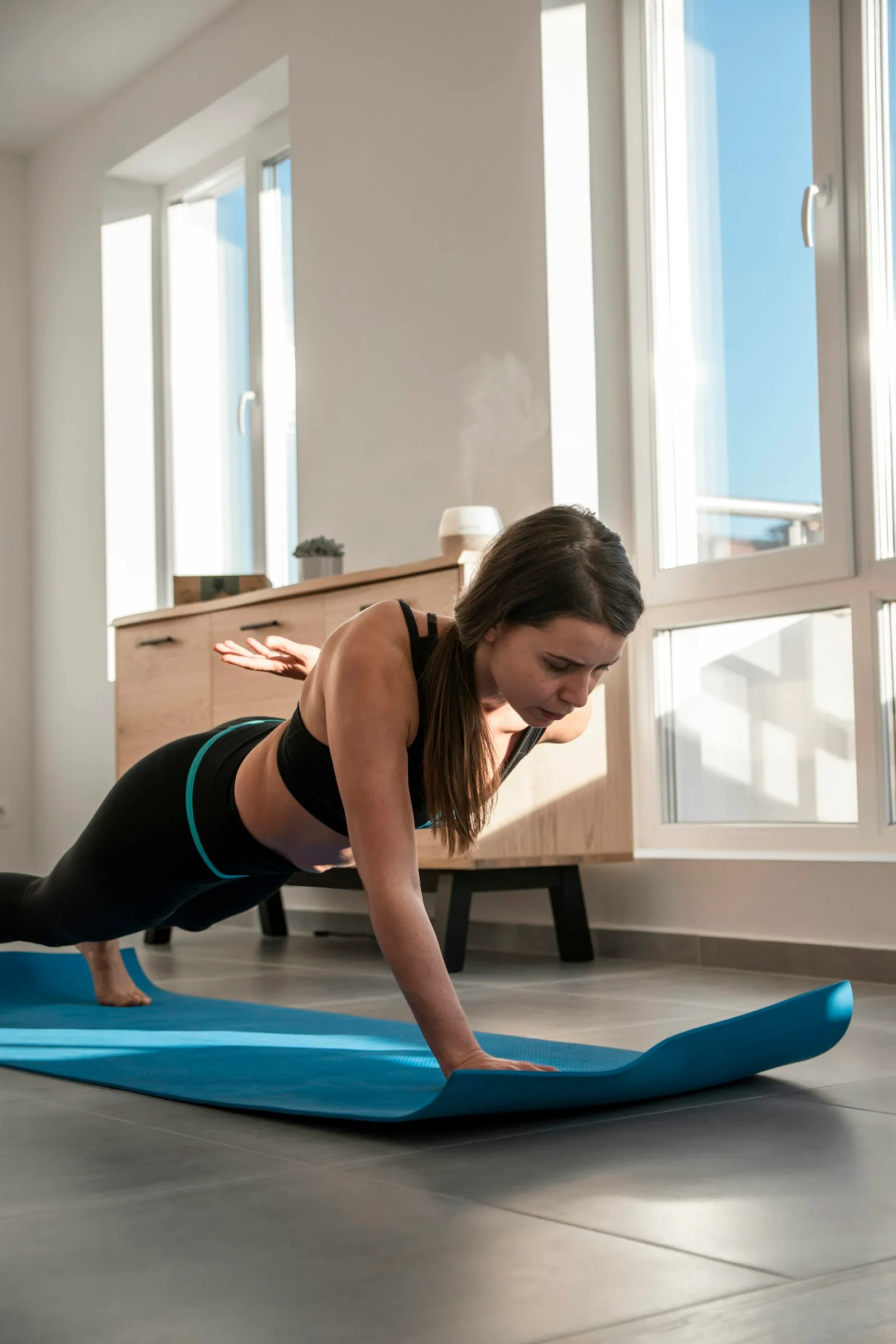
- Front plank. Hold a straight line on forearms and toes (or knees to start). Quality over duration: 20 to 40 seconds of a hard, braced hold beats two minutes of sagging.
- Side plank. On one forearm, body in a straight line, hips lifted. Trains the obliques and the deep stabilizers that protect against the side-to-side collapse that ages posture.
- Pallof press. Hold a resistance band anchored at chest height to your side, press it straight out, resist the pull to rotate. The clearest example of anti-rotation core work, and it carries over to real life.
- Glute bridge. Lying on your back, drive your hips up by squeezing the glutes. Trains the back of your core and counters the all-day sitting that weakens it. Pairs naturally with glute training.
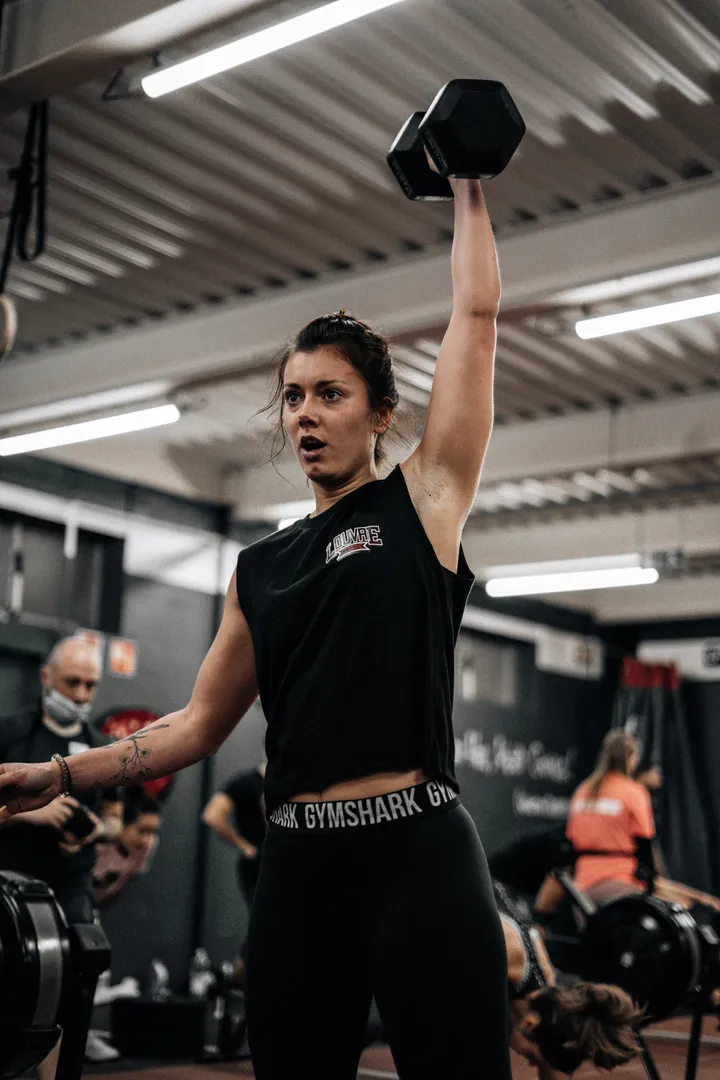
- Suitcase carry. Walk while holding one heavy dumbbell at your side, staying tall and not leaning. Your core fights to keep you upright. Brutally practical loaded core work.
Notice what is not on the list: 100-rep crunch sets, full sit-ups, and constant bicycle crunches. They are not forbidden, but they are flexion-heavy, harder on the back, and risky with abdominal separation, and they are not better at building a useful core.
A simple 10-minute core routine
Do this 2 to 3 times a week, ideally tacked onto a full-body strength session. Two to three rounds:
- Dead bug: 8 per side
- Bird dog: 8 per side
- Front plank: 20 to 40 seconds
- Side plank: 15 to 30 seconds per side
- Glute bridge: 12 reps
- Pallof press (if you have a band): 10 per side
Progress by adding a few seconds, a few reps, or a little load over weeks. That is it. Your core also gets trained hard by squats, deadlifts, and carries, so this does not need to be long, and it should not be daily.
Check for diastasis recti first
Before you load up on any core work, do a 30-second self-check, because abdominal separation (diastasis recti) is common after 40 and after pregnancy, and it changes what is safe.
Lie on your back, knees bent, feet flat. Place your fingers just below your belly button, lengthwise down the midline. Lift your head and shoulders slightly off the floor. Feel for a gap between the two bands of abdominal muscle. A gap wider than about two finger-widths, or a soft doming or ridge that pushes up the middle, suggests a separation.
If you have one, skip crunches and sit-ups for now. Focus on the dead bug, bird dog, gentle planks, and proper breathing and bracing, and consider seeing a pelvic-floor physical therapist. These moves help close and support the separation; repeated crunching can make the doming worse.
What actually flattens the menopause belly
Here is where to put the effort the crunches were wasting. Losing the belly is about lowering your overall body fat, and in menopause that takes a specific, honest combination:
- Strength training, two to three times a week, to build and protect muscle. Muscle is your metabolic engine and the thing menopause quietly erodes. Start with strength training for women over 50 (or over 40).
- Enough protein, which preserves muscle in a deficit and keeps you full. Most women in midlife eat far too little; our protein guide and the free protein calculator give you a target in seconds.
- A modest calorie deficit, the only thing that actually removes fat. Modest, not crash dieting, which costs you muscle and backfires.
- Sleep and stress, because chronically high cortisol nudges fat toward the belly. Not a magic lever, but a real one.
This is slower and less satisfying than being told ten crunches will do it. It is also the only thing that works, and it improves your strength, bones, and energy on the way, which crunches never will.
What to skip
- Daily crunch marathons. More crunches do not burn more belly fat, they just fatigue your hip flexors and low back.
- Ab gadgets, “ab belts,” and EMS toners. They do not reduce belly fat. Spot reduction does not work no matter what is strapped to your middle.
- Waist trainers and “belly melt” wraps. They temporarily compress, change nothing underneath, and can interfere with breathing and core function.
- Crunches and sit-ups if you have diastasis recti. Use the brace-and-stabilize moves instead until the separation improves.
- Doing only ab work. A core routine with no full-body strength training misses the muscle and metabolic benefits that actually change your body composition.
The bottom line
Ab exercises for menopause are worth doing, just not for the reason most people sell them. They build a strong, stable core that protects your back, steadies your balance, and supports everything you lift and carry, which genuinely matters more in this stage of life. They do not burn the menopause belly, because nothing trains fat off one spot. Do the smart core moves two or three times a week, check for a separation first, and put your real fat-loss effort into strength training, protein, and a modest deficit. That is the honest plan, and it is the one that delivers both the strong middle and, over time, the leaner one.