If your goal is to lose the soft layer that showed up around your middle in your 40s while actually getting stronger and more defined, you do not want to just lose weight. You want body recomposition: less fat and more muscle, at the same time. It is a different goal than the scale measures, and it needs a different plan than the one that worked at 30.
Here is the honest, evidence-based version of body recomposition for women over 40. What it actually is, whether you can really lose fat and build muscle simultaneously (you can), what changes after 40 that nobody mentions, and the real protein and training numbers that make it happen. No crash diets, no detoxes, no magic.
The short answer
Body recomposition means losing fat and building muscle at the same time, so your body changes shape even if the scale barely moves. It is real, it is achievable after 40, and it runs on three levers.
- Enough protein: roughly 0.7 to 1 gram per pound of body weight per day, toward the higher end after 40.
- A modest calorie deficit: about 10 to 20 percent below maintenance, not a crash.
- Progressive strength training: 2 to 4 sessions a week, adding weight or reps over time.
- Patience and the right metric: months, not weeks, and you track your waist, photos, and strength, not the scale.
That is the whole recipe. The rest of this guide is how to run it as a woman whose hormones and recovery are not what they were at 25.
What is body recomposition?
Body recomposition, or “recomp,” is changing the ratio of fat to muscle on your body without necessarily changing your total weight. You lose fat and gain muscle in parallel, so you get smaller and firmer while the number on the scale stays roughly flat.
That makes it different from the two traditional approaches. A bulk means eating in a surplus to maximize muscle gain, accepting some fat gain along the way. A cut means eating in a deficit to lose fat, accepting some muscle loss. Recomposition threads the needle: a small deficit or maintenance calories, paired with enough protein and hard training, so you nudge both numbers in the right direction at once.
It is slower than a dedicated bulk or cut for any single goal, but for most women over 40 it is the better fit. You do not want to spend months deliberately gaining fat, and you definitely do not want the muscle loss that comes with aggressive dieting, because that muscle is exactly what you are fighting to keep.
Can you really lose fat and build muscle at the same time?
Yes. This gets argued about online, but the research is clear, and so is the mechanism.
In a controlled trial, researchers put participants in a steep calorie deficit while training hard, and the higher-protein group gained lean mass while losing fat over four weeks. Both groups lost fat; only the higher-protein, hard-training group also added muscle in a deficit. That is recomposition, demonstrated under tightly controlled conditions.
The mechanism is straightforward: in a modest deficit, your body pulls energy from fat stores, while the combination of enough protein and a strong training stimulus signals your muscles to grow. Your fat tissue fuels the muscle building. That is why recomposition works best for people with more fat to lose and less training history, because they have ample fuel on board and a lot of untapped muscle-building potential. If you are newer to lifting, returning after years away, or carrying extra body fat, you are the ideal recomposition candidate, and that describes a large share of women starting in their 40s and 50s.
The flip side of the honesty: a lean, well-trained athlete cannot recompose nearly as fast, because she has little spare fuel and is closer to her muscular ceiling. For her, alternating focused phases works better. But that is not where most women here are starting.
Why body recomposition is different after 40
Everything above is true at any age. What the general articles miss is that the numbers and the difficulty shift for women in midlife, and pretending otherwise just sets you up to feel like you are failing.
Estrogen changes where you store fat. As estrogen declines through perimenopause and menopause, fat redistributes from the hips and thighs toward the abdomen, including the deep visceral fat around your organs. A study tracking women through the menopausal transition found visceral fat increased while daily energy expenditure dropped, often without any change in habits. This is the “I am doing the same things but my middle is different” experience, and it is physiology, not a willpower failure. We go deeper on the fat-loss side of this in perimenopause weight gain.
Your muscles need more protein to respond. With age, muscle becomes less sensitive to protein, a phenomenon called anabolic resistance. The same 20 grams that triggered a strong muscle-building response at 30 produces a weaker one at 55. The fix is not to give up; it is to eat more protein per meal and to lift hard enough to amplify the response.
Muscle loss speeds up. Without resistance training, women lose muscle steadily through midlife, and that muscle is your metabolic engine. Losing it makes every part of recomposition harder. Training to keep and build it is non-negotiable.
The takeaway is not that recomposition stops working after 40. It is that the protein target goes up, the training has to be real, and the timeline is a bit longer. Do those things and the same physiology that builds muscle in a 25-year-old builds it in you.
The high-protein diet for body recomposition
Nutrition is where recomposition is won or lost, and protein is the lever that matters most. Protein is what your body rebuilds muscle from, and it is the nutrient that lets you hold (and even add) muscle while you lose fat.
The number: 0.7 to 1 gram of protein per pound of body weight per day. After 40, aim for the higher end of that range to overcome anabolic resistance. A 160-pound woman is targeting roughly 112 to 160 grams a day. That is more than most women eat, usually by a lot. Our protein calculator gives you your exact number in seconds, and protein drinks for women over 50 covers how to hit it when your appetite is not cooperating. The evidence that this works is strong: across studies, adequate protein meaningfully increases the muscle and strength you gain from resistance training.
Spread it across meals. Because of anabolic resistance, your body uses protein better in roughly 30 to 40 gram doses spread through the day than in one big dinner serving. Aim for a solid protein source at each meal: eggs or Greek yogurt at breakfast, not just toast.
The calorie side: a modest deficit, not a crash. Eat about 10 to 20 percent below your maintenance calories, often 200 to 400 fewer per day. That is enough to lose fat steadily while leaving the energy and recovery capacity to build muscle. A large deficit does the opposite of recomposition: it burns through muscle, tanks your training, and stalls everything. If you are a beginner or returning after a long break, you may even recompose at maintenance calories, because the training stimulus alone is powerful when it is new.
Fill the rest with whole foods and fiber. Protein first, then plenty of vegetables and fruit for fiber and satiety, enough healthy fat for hormones, and carbohydrates timed around your training to fuel hard sessions. There is no forbidden food and no detox. Recomposition is a long game played with normal eating, slightly tilted toward protein and slightly under maintenance.
Strength training for body recomposition
If protein is the material, strength training is the signal. Without it, a calorie deficit just makes you a smaller version of the same shape, because you lose fat and muscle together. The training is what tells your body to keep the muscle and build more, so the fat you lose reveals definition instead of just less of you.
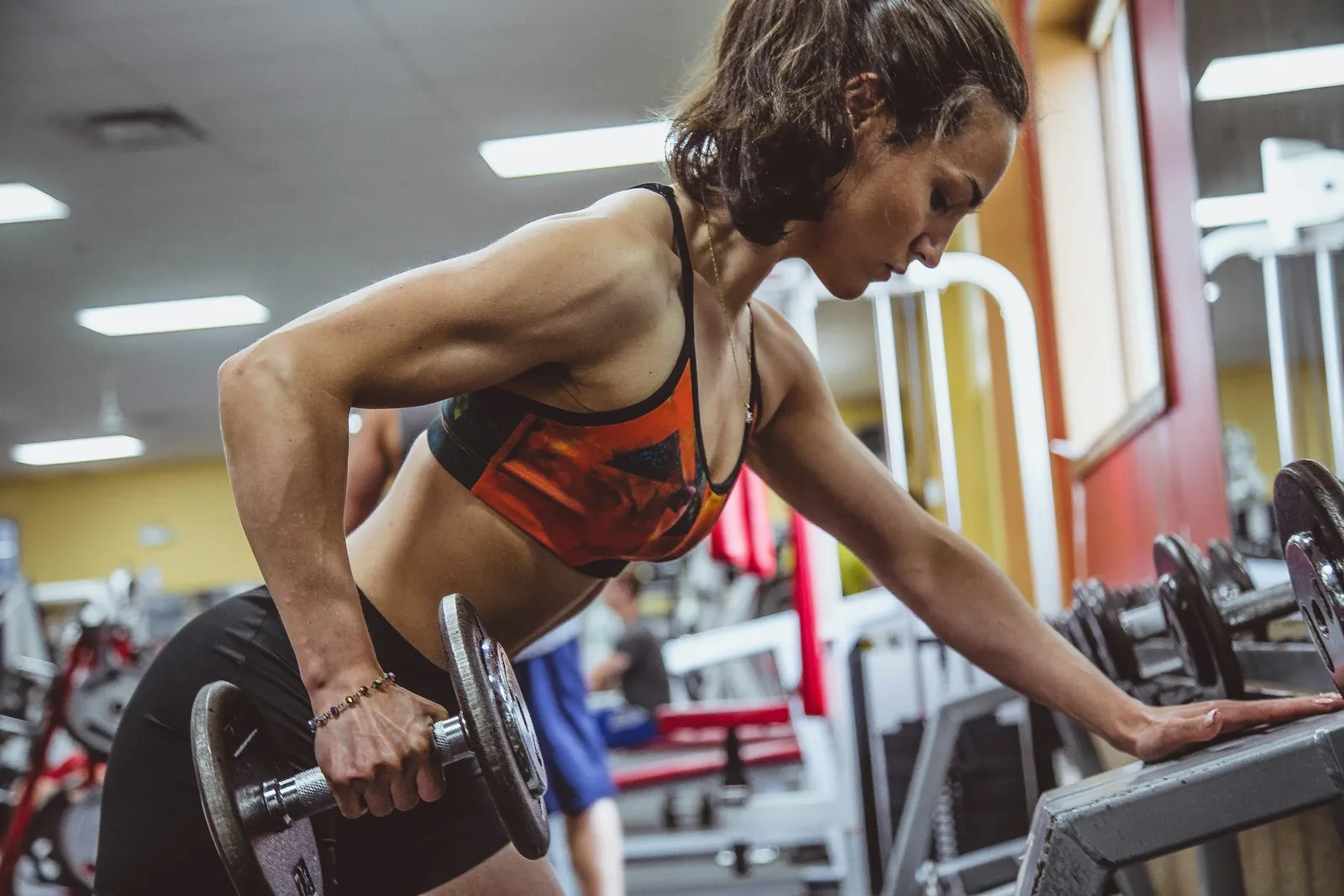
Lift 2 to 4 times a week. Full-body sessions or an upper/lower split both work. What matters is that you train all the major muscles across the week with real effort. Start with strength training for women over 40, or past 50, the over-50 guide.
Prioritize compound lifts. Squats, hinges, presses, rows, and carries train the most muscle per minute and drive the biggest recomposition response. The deadlift in particular earns its place by loading the whole body at once.
Use progressive overload. This is the engine. Add a little weight, a rep, or a set over time. If you are lifting the same weights for the same reps you were three months ago, your muscles have no reason to grow. Progression is what separates training that recomposes your body from exercise that just burns some calories.
Keep cardio in its lane. Walking and Zone 2 cardio support fat loss and heart health and recover easily, so they belong in the plan. But cardio does not build the muscle that recomposition depends on. Do it on top of the lifting, not instead of it.
How long does body recomposition take?
Honestly: months, and longer after 40 than the before-and-after photos suggest. Expect the first visible changes around 8 to 12 weeks of consistent protein and training, and meaningful, noticeable change by about 6 months. Bigger transformations are a one to two year project of steady work, not a 30-day challenge.
The single most important thing to understand is why the scale lies during recomposition. If you lose 4 pounds of fat and gain 4 pounds of muscle, the scale reads exactly the same while your body looks and feels completely different, because muscle is denser and takes up less space than fat. Women who weigh themselves daily during recomposition often conclude it is not working and quit, right as it is working.
So change what you measure. Track your waist circumference (the clearest recomposition signal), progress photos every few weeks in the same light, how your clothes fit, and your strength numbers in the gym. When the scale is flat but your waist is down two inches and your deadlift is up 30 pounds, that is recomposition succeeding, and the scale simply cannot see it.
What to skip
- Crash diets and aggressive cuts. A big deficit strips the muscle you are trying to build. Modest is the whole point.
- Cutting protein to cut calories. Protein is the one macro you protect. Trim carbs or fat if you must, never protein.
- Cardio-only plans. Endless cardio with no lifting burns muscle along with fat and leaves you smaller but no firmer. Spot-reduction does not exist either, so no amount of ab work melts belly fat; we cover that in ab exercises for menopause.
- Daily scale-watching. It measures the one thing recomposition is designed to hold steady. Use the tape measure and the mirror.
- Recomp supplements and “fat-burner” stacks. None of them recompose your body. The only supplement with solid evidence for the muscle side is creatine (here are the best creatine for women picks), and even that is a small assist on top of protein and training, not a shortcut.
- Comparing your timeline to a 25-year-old’s. Your physiology is different. Run your own race with the right numbers and it works.
The bottom line
Body recomposition is the goal that actually matches what most women over 40 want: not a smaller number on the scale, but less fat, more muscle, and a body that is stronger and more defined than it was a year ago. It is real, it is backed by controlled research, and it works in midlife as long as you respect what changed. Eat the protein (more than you think, spread through the day), hold a modest deficit instead of crashing, lift progressively a few times a week, and judge it by your waist and your strength rather than the scale. Do that for six months and you will stop chasing weight loss for good, because you will have something better: a recomposed body that keeps paying you back for decades.